Shop by Ingredient

Salicylic Acid Skincare in Pakistan

Discover Kelpcare skincare formulated with salicylic acid for oily, congested and acne-prone skin. Compare our Salicylic cleanser and leave-on serum, understand how each formula works, and choose the option that fits naturally into your skincare routine.

Salicylic Acid

Shop Products with Salicylic Acid

Salicylic acid can be used in different product formats, and the right choice depends on your skin, routine and preferred level of contact with the active ingredient.

Kelpcare currently offers a daily rinse-off cleanser with 1% salicylic acid and a targeted leave-on serum with 2% salicylic acid. Start with the format that best suits your routine rather than choosing only by percentage.

3 products
salicylic acid serum Targeted Care

serum

2% Salicylic Acid

Salicylic Acid 2% Serum

A leave-on salicylic acid serum designed for targeted care of blemish-prone, oily and congested-looking skin. Because it remains on the skin, it should be introduced gradually according to your skin's tolerance.

Rs.2,590.00 PKR

View Product

Formula Guide

Salicylic Acid Cleanser or Serum?

AcneXpert Salicylic Acid Deep Oil Control Cleanser

Rinse-Off Formula

AcneXpert Deep Oil Control Cleanser

Product type
Rinse-off cleanser
Salicylic acid
1%
Routine step
Cleansing
Contact with skin
Short contact, then rinsed off
View Cleanser
Salicylic Acid 2% Serum

Leave-On Formula

Acne Control & Clearing Serum

Product type
Leave-on serum
Salicylic acid
2%
Routine step
Targeted care after cleansing
Contact with skin
Extended leave-on contact
View Serum

A 2% serum is not automatically the right choice for everyone. People who are new to salicylic acid may prefer starting with a rinse-off product, while experienced users may choose a leave-on formula for more targeted care.

Education

What Is Salicylic Acid?

The ingredient

An Oil-Soluble BHA

Salicylic acid is oil-soluble, which makes it different from many water-soluble exfoliating acids. This characteristic allows it to work within oily environments on the skin and makes it especially relevant in formulas designed for excess oil and congestion.

Why It Is Used

For Oily and Congested-Looking Skin

Salicylic acid is commonly included in skincare for oily and acne-prone skin because it supports exfoliation and helps reduce the buildup of oil and dead skin on the surface. With consistent and appropriate use, skin can appear clearer, smoother and less congested.

Choosing a Formula

Rinse-Off vs Leave-On

The product format matters just as much as the percentage. A salicylic acid cleanser is removed from the skin after cleansing, while a serum stays on the skin for a longer period. Beginners or people whose skin is easily irritated may prefer a simpler approach and introduce active products gradually.

Skin Balance

More Is Not Always Better

Using multiple exfoliating products at the same time can make a routine unnecessarily aggressive. A focused routine with one well-chosen active product is often easier to manage. Pay attention to dryness, tightness or discomfort and adjust usage when needed.

Routine Guidance

Where Salicylic Acid Fits in Your Routine

Step 1

Cleanse

1% Salicylic Acid

Use a cleanser to remove excess oil, sunscreen, dirt, and daily buildup. If you choose the AcneXpert cleanser, this is where your 1% salicylic acid product fits into the routine.

View Cleanser

Step 2

Targeted Care

2% Salicylic Acid

If your routine includes a leave-on salicylic acid serum, apply it according to the product directions after cleansing. New users should introduce leave-on active products gradually instead of immediately using them every day.

View Serum

Step 3

Hydrate

Support the Skin Barrier

Follow active skincare with suitable hydration. Oily skin can still benefit from a lightweight moisturiser that helps maintain skin comfort and supports the skin barrier.

Step 4

Protect During the Day

Daily Sun Protection

Daily sun protection is an important part of a balanced skincare routine, particularly when exfoliating ingredients are part of your regimen.

FAQs

Salicylic Acid FAQs

1. What is salicylic acid?

Salicylic acid is a beta-hydroxy acid, or BHA, commonly used in skincare for oily, congested and acne-prone skin. Because it is oil-soluble, it is particularly useful in formulas designed to address excess oil and buildup.

2. What does salicylic acid do for the skin?

Salicylic acid supports exfoliation and helps reduce the buildup of excess oil and dead skin on the surface. With appropriate use, it can help skin appear clearer, smoother and less congested.

3. Is salicylic acid good for oily skin?

Salicylic acid is commonly used in products designed for oily skin because its oil-soluble nature makes it well suited to formulas focused on excess sebum and congestion. The ideal formula and frequency still depend on individual skin tolerance.

4. Is salicylic acid suitable for acne-prone skin?

Salicylic acid is widely used in skincare formulated for blemish-prone and acne-prone skin. It can be included as part of a simple routine focused on cleansing, targeted care, hydration and daytime sun protection.

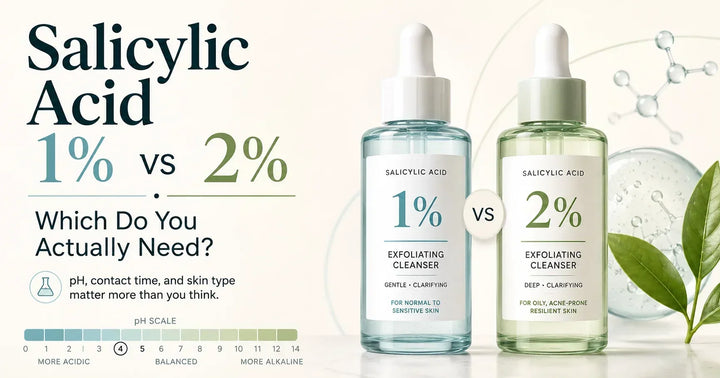
5. What is the difference between 1% and 2% salicylic acid?

The percentage tells you the concentration of salicylic acid in the formula, but it does not tell the whole story. Product format, contact time, supporting ingredients and your skin's tolerance all matter. A 1% rinse-off cleanser and a 2% leave-on serum serve different purposes.

6. Should beginners start with a salicylic acid cleanser or serum?

Many beginners find a rinse-off cleanser easier to introduce because it stays on the skin for a shorter period. A leave-on serum provides longer contact and may require a slower introduction. There is no single best choice for everyone.

7. Can I use a salicylic acid cleanser and serum together?

It is possible for some routines to contain both, but using two salicylic acid products is not necessary for everyone. Starting with one product makes it easier to assess how your skin responds and helps reduce the risk of overdoing active skincare.

8. How often should salicylic acid be used?

Frequency depends on the product format, concentration, your overall routine and your skin's tolerance. Always follow the directions on the specific product and reduce frequency if your skin becomes excessively dry, tight or uncomfortable.

9. Can salicylic acid be used with niacinamide?

Salicylic acid and niacinamide are commonly found in routines for oily and blemish-prone skin. Rather than introducing several new active products at once, add products gradually so you can understand how your skin responds.

10. Does oily skin still need moisturiser when using salicylic acid?

Yes. Oil production and skin hydration are not the same thing. A suitable lightweight moisturiser can help maintain skin comfort and support the skin barrier while active ingredients are part of the routine.

11. Can sensitive skin use salicylic acid?

Sensitive skin may require a slower and more cautious introduction. Start with a simple routine and lower frequency, and stop or reduce use if persistent irritation occurs. People with ongoing skin conditions should seek advice from a qualified healthcare professional.

12. How long does salicylic acid take to work?

Skincare results are not immediate and can vary significantly between individuals. Consistency, product choice, frequency of use and the rest of the routine all influence how the skin responds. Avoid increasing usage simply to try to get faster results.

Ready to Explore?

Find the Right Salicylic Acid Formula for Your Routine

Choose between a rinse-off cleanser and targeted leave-on serum based on your skin, routine and experience with active ingredients. Keep your routine simple, introduce products gradually and focus on consistency rather than using more products than your skin needs.

Shop the Collection