Shop by Ingredient

Hyaluronic Acid Skincare in Pakistan

Skin feeling tight or short on moisture? Hyaluronic acid attracts and holds water, supporting a softer, more hydrated feel. Explore Kelpcare serums with hyaluronic acid or sodium hyaluronate, then choose the formula that best fits your routine. Start with your main skincare goal, keep moisturizer in place, and add only what you need.

kelpcare-hyaluronic-acid-collection

Find Your Hydration Fit

A shared hydrating ingredient does not make every serum interchangeable. Choose a hydration-focused option when moisture is your priority, or explore a formula with additional actives when you have another skincare goal. Read the full ingredient list and directions before deciding. You do not need to layer every serum in this collection.

8 products
salicylic acid serum Exfoliating formula

serum

Hyaluronic acid

Salicylic Acid 2% Serum

Consider this option when you specifically want an exfoliating serum. Its hyaluronic acid does not make the whole formula a simple hydrator. Review the directions and avoid adding it just to add more hydrating products to your routine.

Rs.2,590.00 PKR

View Product

Formula Guide

One Hydrating Ingredient, Different Formulas

Kelpcare 5% Niacinamide + 1% Hyaluronic Acid Hydrating & Glowing Serum

Niacinamide formula

Hydration-Focused Serum

A starting point to consider when you want a dedicated hydration step without choosing an exfoliating serum.

Product type
Leave-on serum
HA form listed
Sodium hyaluronate
Other listed ingredients
Niacinamide; sodium PCA
Routine position
After cleansing; before moisturiser
View This Serum
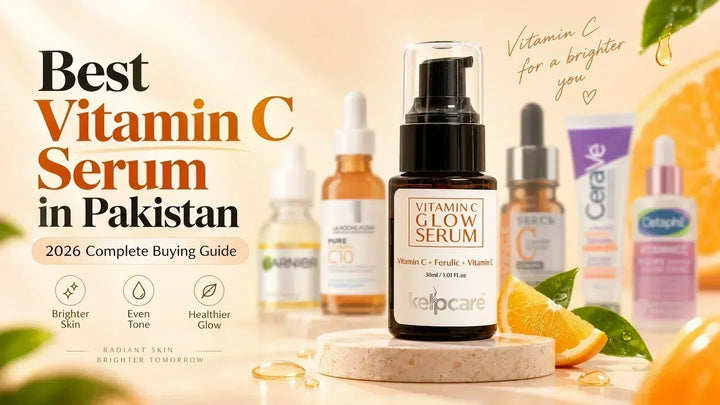
Vitamin C Serum in Pakistan for Dark Spots & Glow

Vitamin C formula

Vitamin C Serum

Explore this option when a vitamin C serum fits your existing plan. Keep the rest of the routine simple while you introduce it.

Product type
Leave-on serum
HA form listed
Sodium hyaluronate
Other listed ingredients
Ethyl ascorbic acid; ferulic acid
Routine position
After cleansing; before moisturizer
View This Serum
Salicylic Acid 2% Serum

Salicylic and mandelic acids

Exfoliating Serum

Choose this for its exfoliating formula, rather than for hyaluronic acid alone. A hydrating ingredient does not cancel the precautions attached to other actives.

Product type
Leave-on serum
HA form listed
Hyaluronic acid
Other listed ingredients
Salicylic acid; mandelic acid
Routine position
After cleansing; before moisturizer
View This Serum

Hyaluronic acid content alone cannot tell you how well a finished serum will suit your skin. Check the directions, other ingredients, and how your skin responds to the full formula.

Education

What Hyaluronic Acid Can Do for Your Skin

Know the ingredient

A Water-Holding Ingredient

Hyaluronic acid helps bind water and is used in moisturizing skincare. You may also see sodium hyaluronate, its sodium salt, in an ingredient list. These names identify related ingredients, but they do not tell you the molecular size or how a complete serum performs. You do not need to memorize the chemistry; start by understanding the product’s role.

Know the limits

Hydration with Realistic Expectations

Topical hyaluronic acid formulations have improved skin hydration in human research. That supports its use in moisturizing skincare, but a result from one studied cream cannot be promised for every serum. Look for comfortable skin and a routine you can maintain. A product percentage alone is not evidence of a particular result or a deadline for seeing it.

Make a useful choice

Choose the Formula, Not Just the Name

Ask what you want this purchase to add. Is there a gap in your moisturizing routine, or are you looking for a specific active? A serum can contain hyaluronic acid alongside ingredients chosen for a different purpose. Read the comparison, check the directions, and pick one clear role. Buying several options does not mean using them all together.

Keep comfort in mind

Give Your Skin a Careful Introduction

Test a new product on a small area before applying it across your face. Watch for redness, itching, or swelling, and stop using a product that causes a reaction. Hydrating ingredients do not make every combination suitable for sensitive skin. If irritation is severe or does not settle, seek advice from a dermatologist.

For more context, read the research on topical hyaluronic acid and dermatologists’ advice on choosing a moisturizer. Ingredient research helps explain skincare choices; it does not establish identical results for every finished product.

Routine Guidance

Build a Simple Hydration Routine

Cleanse

Cleanse Gently

Start with a comfortable base

Use a cleanser that suits your skin and rinse it off thoroughly. Avoid vigorous rubbing. If your face feels persistently tight after washing, review the cleanser and your moisturizing routine before adding more active products.

Selected serum step

Choose One Serum

Follow its own directions

Apply your chosen serum after cleansing, using the amount and frequency on its approved label. Don't use the whole collection as a single layered routine. If your main goal is moisture, begin by considering the hydration-focused option

Moisturise

Follow with Moisturiser

Keep this essential step

Apply a moisturizer suited to your skin. Creams can be useful when dryness is the main concern, while lighter textures may feel better on oilier skin. Judge the routine by comfort, not by how many products it contains.

Morning

Finish with Daytime Protection

Broad-spectrum SPF 30 or higher
Use a broad-spectrum, water-resistant sunscreen with SPF 30 or higher on exposed skin. When outdoors, reapply about every two hours and after swimming or sweating, as directed on the label. Include shade and protective clothing; a hydrating serum does not replace sun protection.

Introduce products one at a time so you can notice what suits your skin. If you already use prescription skincare, ask your clinician before adding another active formula.

FAQs

Common Questions

What does hyaluronic acid do for your skin?

Hyaluronic acid attracts and holds water, making it useful in moisturizing skincare. Studies of topical formulations support a hydration benefit. Results depend on the complete product, so avoid judging a serum by its ingredient name alone or expecting the same outcome as a different formula tested in a study.

Is sodium hyaluronate the same as hyaluronic acid?

Sodium hyaluronate is the sodium salt of hyaluronic acid. It is a related skincare ingredient, which is why it appears in this collection. The ingredient name alone doesn't indicate molecular size, concentration, or deeper delivery. Look at the full product information instead of assuming one name automatically means better performance.

Can oily skin still need hydration?

Yes. Oily skin can still benefit from moisturizing care. Choose a texture that feels comfortable, and look for oil-free or non-comedogenic labeling when selecting a moisturizer for acne-prone skin. Hyaluronic acid appearing in a serum does not, by itself, establish that the whole product is non-comedogenic or suitable for everyone.

Do I still need moisturizer after a hyaluronic acid serum?

A serum can be an optional addition, while moisturizer remains useful for keeping a dry-skin routine comfortable. Follow your chosen product’s directions. If your skin already feels comfortable with cleanser, moisturizer, and daytime sunscreen, you don't need to add a serum just to make the routine more complete.

Should I use these serums in the morning or at night?

Check the individual formula. Kelpcare positions its Vitamin C serum for morning use and its hydrating serum for morning or evening use. An exfoliating serum needs its own introduction and directions. Sharing a hydrating ingredient doesn't make every product suitable for the same frequency, and you don't need multiple serum steps.

Does the word acid mean hyaluronic acid exfoliates?

In skincare, hyaluronic acid supports moisture. Do not treat it as an exfoliating step. Some products combine it with exfoliating ingredients, so read the whole label. Even an AHA-containing formula still needs sun-sensitivity precautions, including sunscreen, even when it also contains hydrating ingredients.

Does a higher hyaluronic acid percentage mean better hydration?

A percentage is not a complete performance measure. Ingredient form, molecular size, and the rest of the formula also matter. Research on a particular concentration does not prove that a higher number will always work better. Choose a suitable formula and clear directions, rather than assuming the largest number is best.

What should I do if a serum irritates my skin?

Wash off a product that causes a reaction and stop using it. Don't keep applying it just because a hydrating ingredient sounds gentle. If the reaction is severe or does not improve, consult a dermatologist. Testing a small area before full-face use can help identify a reaction, although it cannot guarantee future tolerance.

Ready to Explore?

Make Hydration Work for Your Routine

Choose a serum for the job you want it to do, keep your routine manageable, and pay attention to how your skin feels. Explore the formulas above, read their individual directions, and keep moisturizer and daytime sun protection in your plan.

Shop the Collection